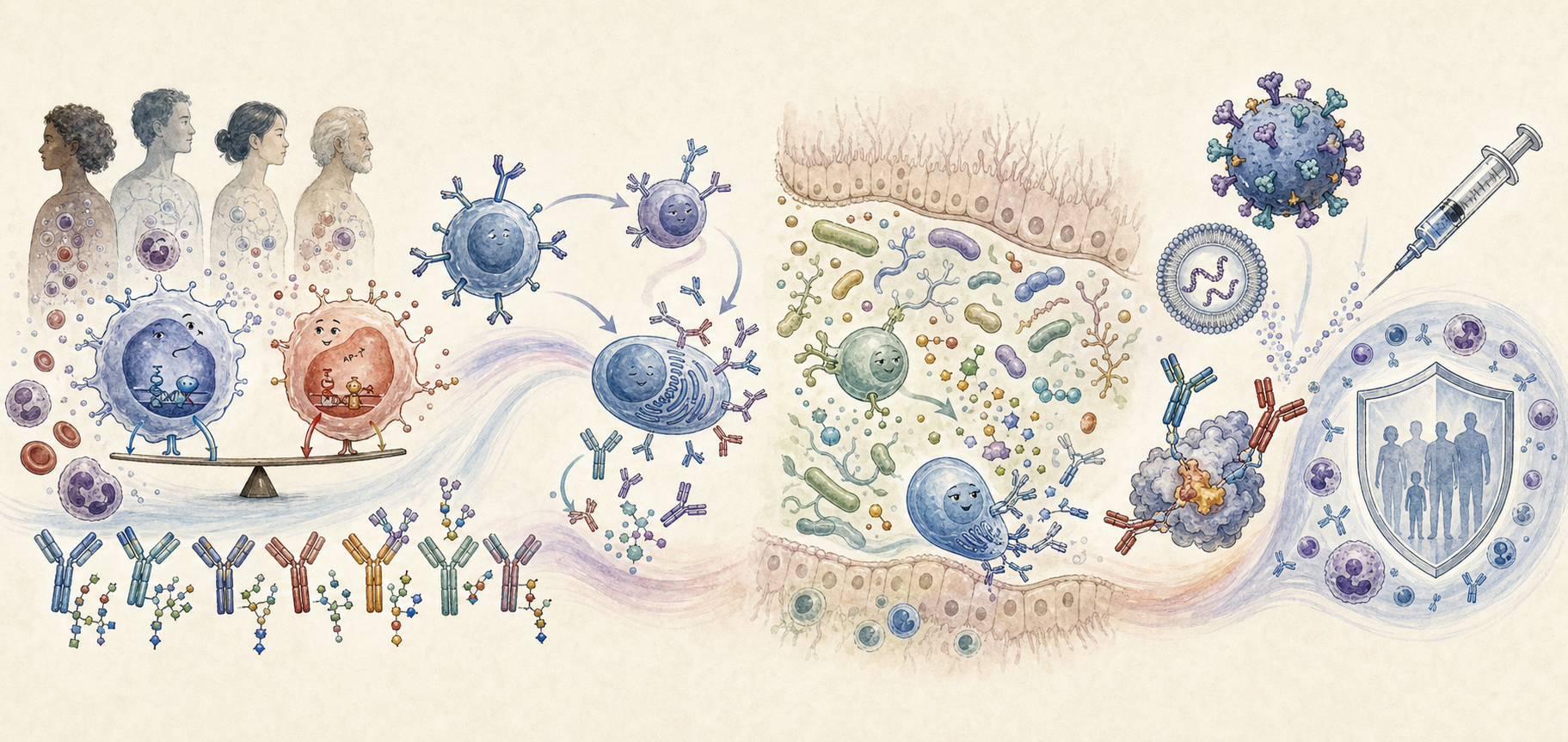
FengLab studies how immune baselines shape response trajectories and protective immunity.
Our scientific program
From immune baseline to immune outcome.
Why do people respond differently to the same biological challenge? We study how pre-existing immune states interact with vaccines, infection, and other perturbations to shape the magnitude, quality, breadth, and durability of human immunity.
The central question
Can an individual immune response be understood, predicted, and ultimately improved?
We connect immune state before a challenge with the cellular trajectories that follow it. This framework lets us move beyond population averages toward mechanistic and personalized models of human immunity.
Research programs
Four connected scales of discovery
01
Before the response
Immune baselines and response trajectories
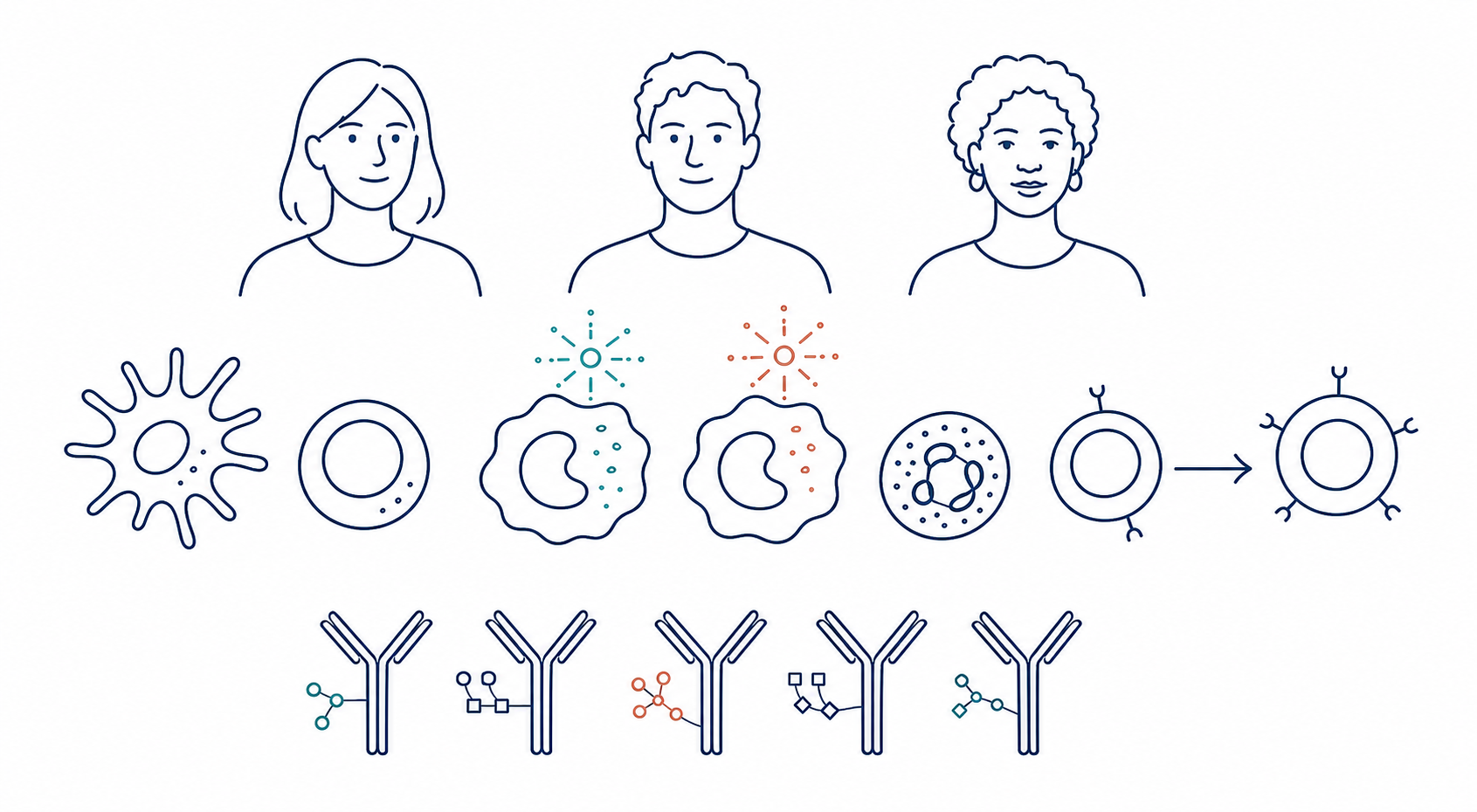
We define the immune states that exist before vaccination or infection and determine how they shape what happens next. A current focus is the balance between interferon-linked and inflammatory programs in monocytes, including the IRF and AP-1 regulatory axes, and how these programs influence T-cell priming and functional fate. We also profile the glycosylation landscape of bulk human immunoglobulins as a systems-level readout of immune state and regulation.
Individual immune-state variation
Human bulk-Ig glycosylation
Innate-to-adaptive immune coupling
Predictive biomarkers of response
02
Making protection last
B-cell fate and antibody quality
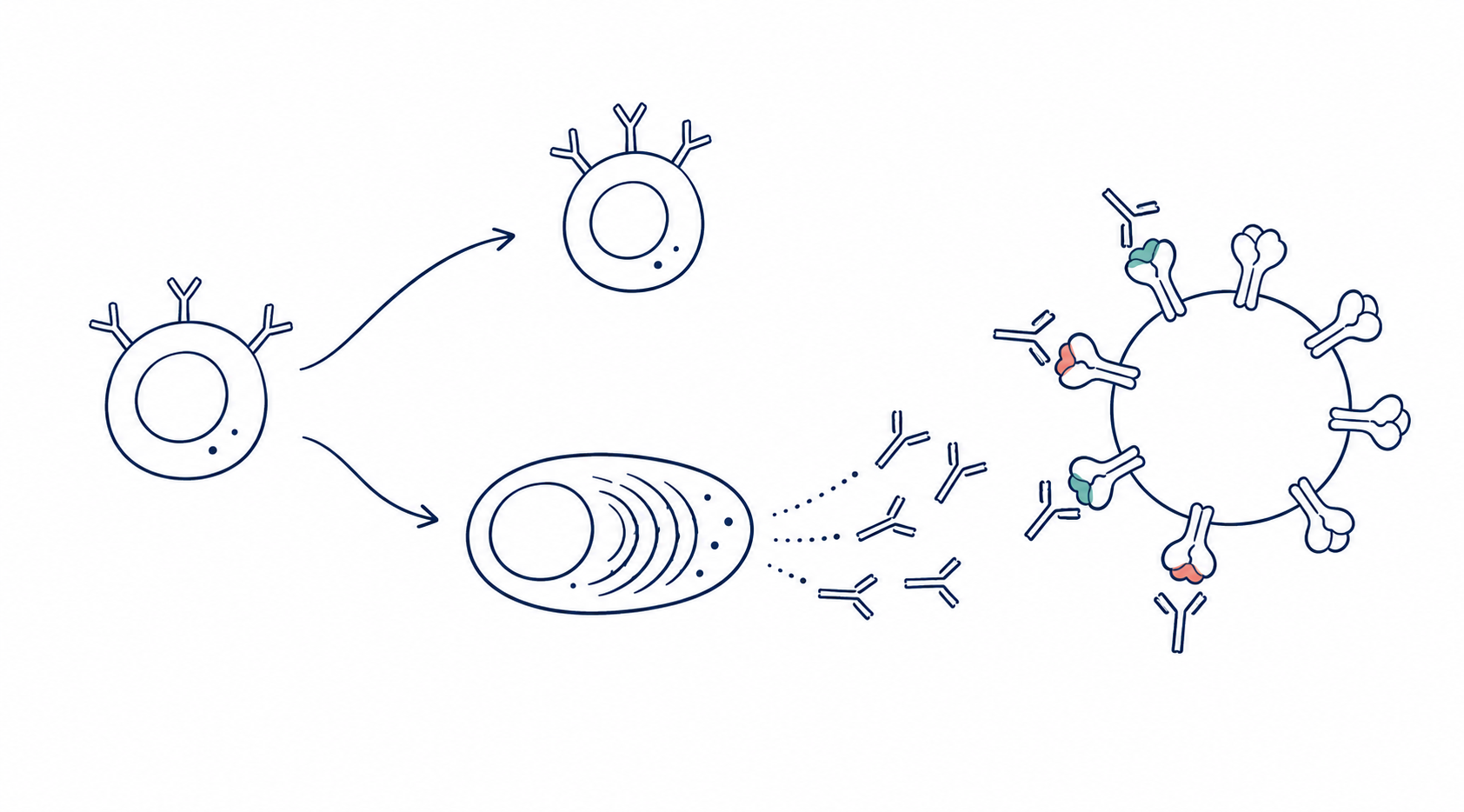
We investigate how early immune activation shapes memory B cells, long-lived plasma cells, and the evolution of neutralizing antibody lineages. Our goal is to uncover the cellular rules that determine whether an antibody response becomes durable, broad, and protective.
Long-lived plasma-cell generation
Memory B-cell and antibody lineage evolution
Durability and breadth of neutralization
03
The host environment
Microbiome–metabolism–immunity
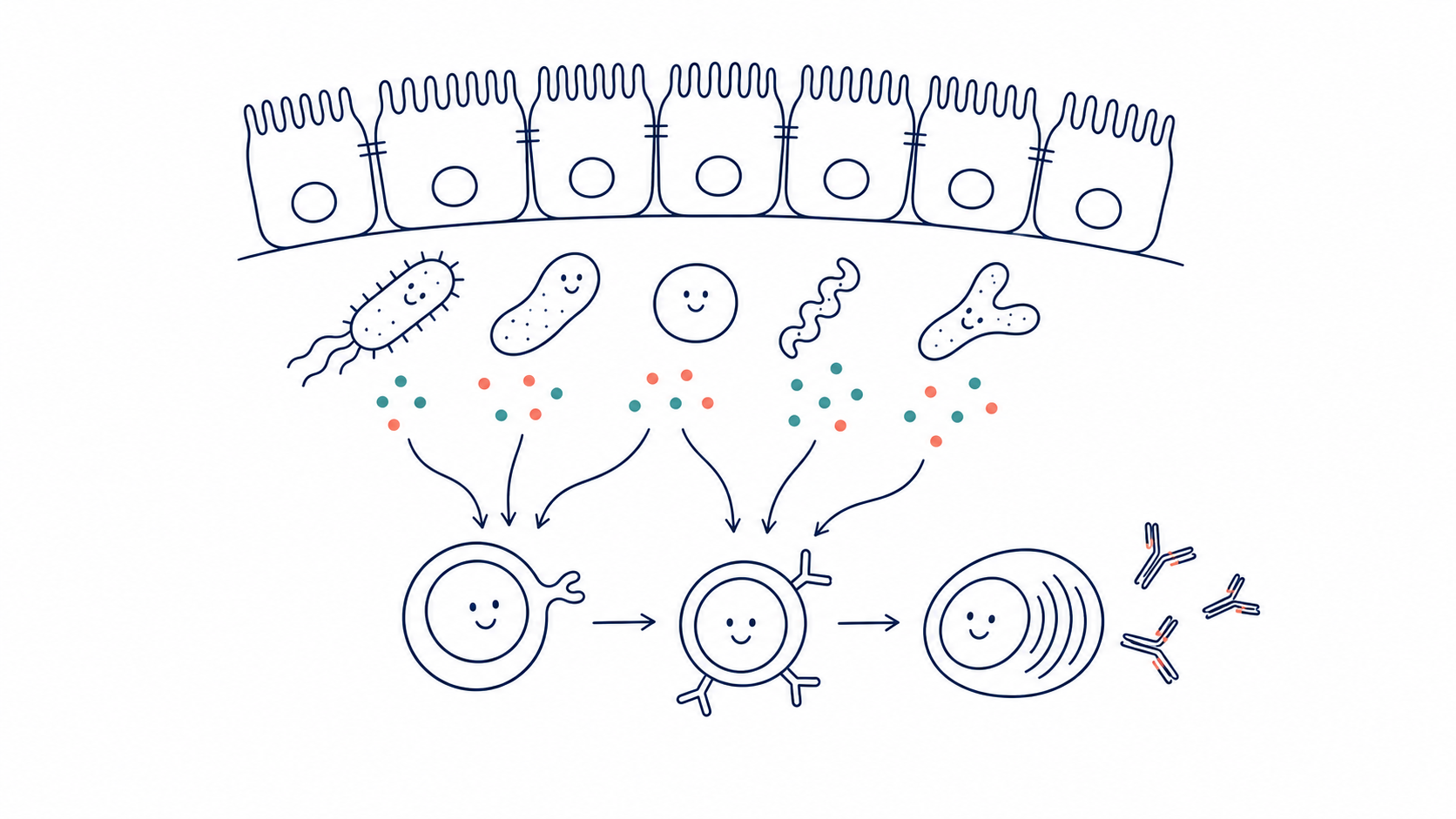
We study how the gut microbiome and its metabolites calibrate immune homeostasis and vaccine responsiveness. By combining prospective human perturbation studies with multi-omics and functional experiments, we seek causal links among microbial communities, metabolic signals, T-cell help, and antibody production.
Human microbiome perturbation studies
Metabolic control of immune function
Microbiome-informed intervention strategies
04
From mechanism to design
Precision vaccinology
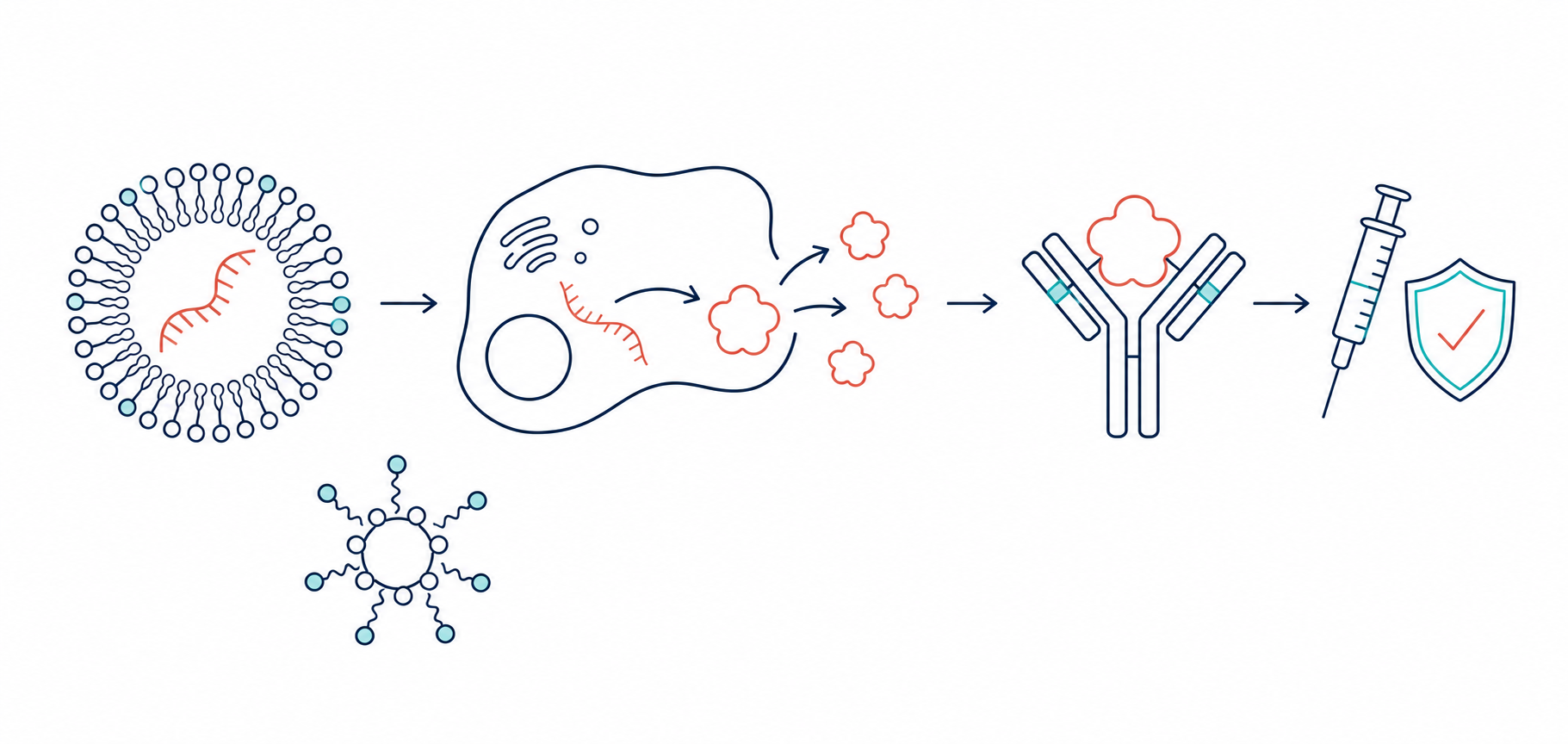
We translate immune mechanisms into better vaccination and antibody strategies. We examine how antigen architecture, adjuvants, dosing, and delivery systems—including nanoparticle and LNP–mRNA platforms—reshape immune trajectories in infectious disease and cancer. This program also includes mRNA-based PD vaccines and antibody discovery and development.
Antigen and adjuvant design
mRNA-based PD vaccines and antibodies
Systems-level vaccine evaluation
Mechanism-guided immune intervention
How we work
Human immunology across scales
01
Observe
Longitudinal human cohorts and precisely timed biological samples.
02
Measure
Single-cell multi-omics, proteomics, immune profiling, and antibody analysis.
03
Model
Computational integration of baseline states and response trajectories.
04
Test
Functional perturbation, experimental models, and causal validation.
The goal
To discover the individual immune function: a mechanistic map connecting who a person is immunologically, what challenge they encounter, and how their immune system will respond.